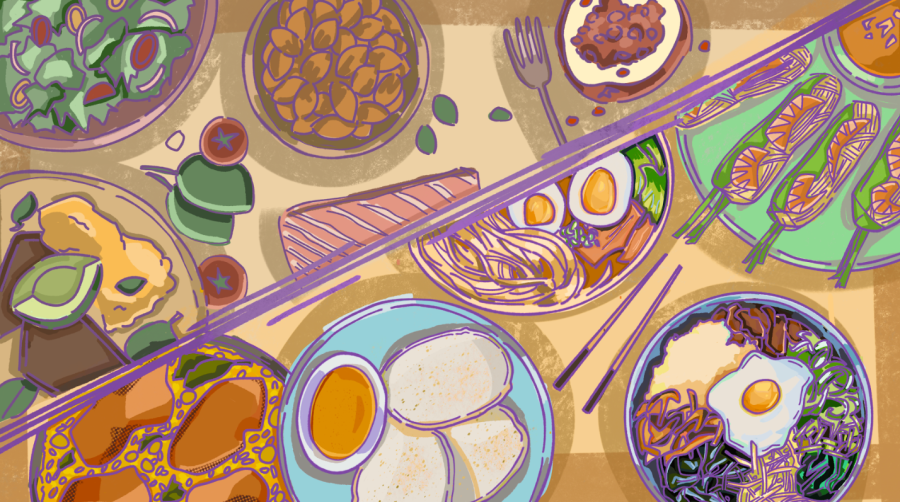
From ice cream to samosas to pasta, food is the one thing that brings everyone together, fostering connections that enhance our well-being, as it influences not only our physical health but also our mental health. What you eat affects your mood. Eating chips or unhealthy snacks while stressed will worsen your condition, however, by eating raw veggies, almonds, or complex carbs, you will feel more relaxed. We know how different diets affect us nutritionally, but how do they affect our mental health and why?
There are three main macronutrients our bodies need: carbohydrates, proteins, and fats. Our bodies cannot produce enough of these nutrients or do not produce them, requiring humans to consume foods with carbs, proteins, and fats in order for us to survive.
There are two types of carbs: simple and complex carbohydrates. Sugar is a simple carb while fiber and starch are complex carbs. Complex carbohydrates are healthier as they are higher in fiber and digest slowly while simple carbs digest quicker causing your blood sugar to spike and making you feel hungry sooner. Psychologically, complex carbs reduce stress and anxiety levels, leading to a positive mindset.
Proteins are good for when you wake up in the morning. Lean protein improve your mood and memory in the morning for the rest of your day. Protein is also a very important part of your meal if you exercise, whether you play a sport or take a walk. Fats are also very good for mood management as well as proper brain function. So how do different cultural diets affect their mental health?
Several examples of this are shown in different diets people consume around the world. Mediterranean diets, which consist of olive oil, fatty fish, nuts, fruits, etc., are shown to reduce symptoms of depression, and improve overall mood and energy levels. The antioxidants in fruits and vegetables improve mood while the omega-3 fatty acids in olive oil and fish reduce depression.
On the other side of the world, in Mexico, their diet contains beans, corn, avocados, spices, etc.. Although there are similarities between these two diets, they are very different. Beans and avocados from Mexican diets also provide a source of healthy fat as well as protein but have a different effect on our mood. These fats and proteins stabilize blood sugar, leading to sustained energy levels and a more positive mood. The spices in this diet stimulate endorphin production which help relieve pain and stress, and improve mood.
Many of us know the saying “You are what you eat,” and, while that’s true, humans also relate to “You feel what you eat.” We see this replicated in many different diets around the world, from Mexico to Greece.
 ev·er·more
Leave a comment